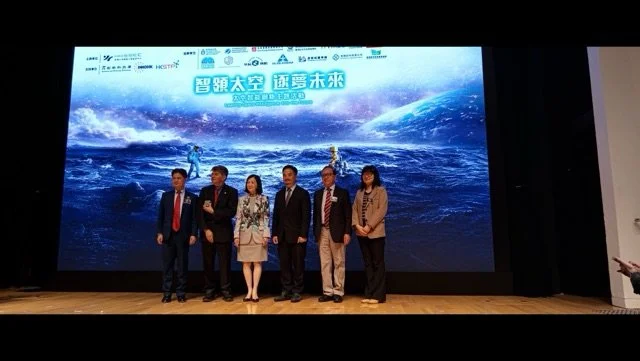
ISTVS President Lutz Richter, upon invitation, attended the opening event of the InnoHK Hong Kong Space Robotics & Energy Centre at the Hong Kong University of Science and Technology (HKUST) on April 28–29. The new research and innovation hub represents a major step forward in space robotics development in Hong Kong.
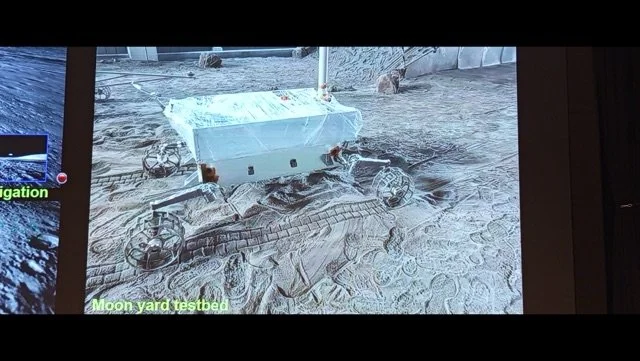
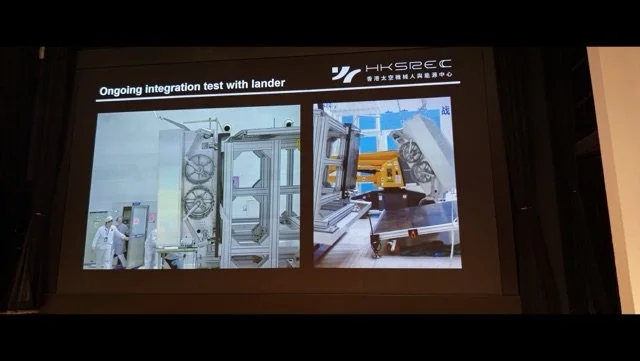
A flagship project of the centre is the Hong Kong Operations Robot, which has been selected for the Chang’e 8 lunar landing mission of China, currently planned for launch in 2029. While the 100 kg system appears to be a relatively compact four-wheeled rover, it integrates a highly advanced dual-armed humanoid robotic torso. This configuration is intended to demonstrate complex in-situ manipulation tasks on the lunar surface, including the ability to perform electric recharging operations for other rover assets operating within the same mission architecture.
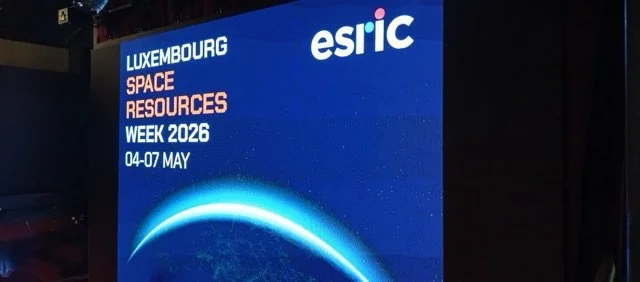
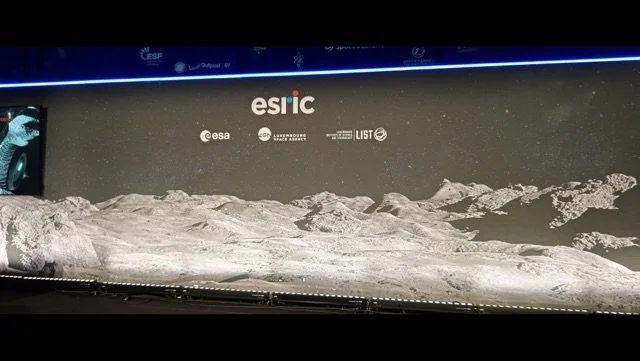
In parallel, the 2026 edition of the Space Resources Week, organized by the European Space Agency (ESA), took place in Luxembourg during the week of May 4. The event featured an extensive set of presentations focused on systems and processes for handling and sorting granular materials on the Moon. These contributions drew heavily from principles of geotechnics, terramechanics, and the design of tools and implements for extraterrestrial surface operations.
These developments are situated within a rapidly expanding global effort toward lunar exploration and resource utilization. The recent crewed lunar flyby mission Artemis II by the National Aeronautics and Space Administration (NASA) further underscores the accelerating return of human and robotic activity to the Moon, offering a preview of future sustained operations on the lunar surface.
These international activities align strongly with the mission of ISTVS. The Society has historically contributed to early lunar rover development and, over the past two decades, has seen a growing body of research in lunar and planetary terramechanics presented at its conferences and published in the Journal of Terramechanics. The continued expansion of space-related research within ISTVS reflects its evolving role in supporting mobility science beyond Earth, particularly in the context of extraterrestrial terrain interaction and resource utilization.